
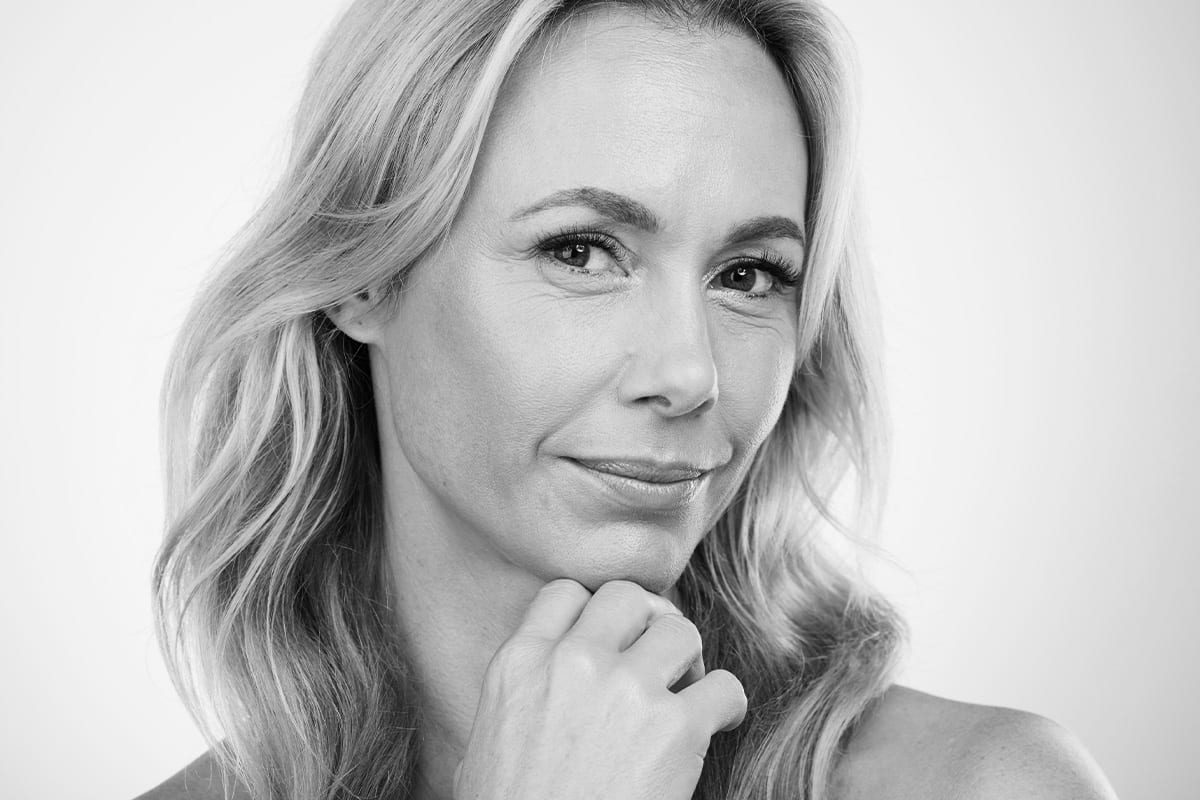
You finally figured out your skin.
You knew which moisturizer worked, which foundation looked good, and exactly how much retinol your face could tolerate. You had a routine, your skin was predictable, and everything seemed to be working.
Then you hit your 40s and suddenly the rules changed.
Your skin feels drier. Your pores look bigger. Pigmentation that used to fade after summer seems determined to stay forever. Products you’ve used for years suddenly irritate you, and you’re noticing fine lines in places you don’t remember inviting them.
If you’re wondering, “What happened to my skin?“, you’re definitely not imagining it.
For many women, the 40s bring significant changes to the skin, and hormones—particularly the hormonal fluctuations associated with perimenopause—can be part of the reason.
The good news is that your skin didn’t suddenly become “bad.” It changed, which means the way you take care of it may need to change too.
Your Hormones Are Changing, and Your Skin Notices
Perimenopause can begin years before your final menstrual period, and estrogen levels don’t simply decline in a perfectly straight line. They can fluctuate considerably along the way.
Estrogen plays an important role in skin hydration, collagen, elasticity, thickness, and overall skin function.
As hormone levels change, you may start noticing that your skin behaves differently than it did in your 20s and 30s.
Some women experience increased dryness and sensitivity, while others suddenly deal with breakouts again. You can even have dry skin and acne at the same time, which seems particularly unfair after surviving teenage acne decades ago.
Welcome to skincare in your 40s.
Why Is My Skin So Dry All of a Sudden?
One of the most common complaints we hear from women in their 40s is that their skin suddenly feels dry.
The moisturizer you’ve used for ten years may no longer feel like enough.
Changes in hormones can affect oil production and the skin’s ability to retain moisture. At the same time, an overly aggressive skincare routine can make dryness even worse.
If you’re using a retinoid, exfoliating acids, vitamin C, scrubs, peels, and every trending skincare product TikTok recommends, your skin barrier may eventually decide it’s had enough.
Signs that your skin needs a little more support may include tightness, flaking, redness, sensitivity, or makeup suddenly looking patchy.
Your 40s may be the decade when your skin starts asking for more hydration and less punishment.
Collagen Has Been Quietly Changing Too
Unfortunately, collagen doesn’t send you a notification when it starts declining.
You usually notice the effects gradually.
Collagen and elastin provide much of the structure, firmness, and resilience we associate with youthful-looking skin. As we age, collagen production and existing collagen both change.
Eventually, you may start noticing that your skin doesn’t have quite the same bounce it once did.
Fine lines become easier to see, pores may appear more noticeable, and areas of the face can start looking slightly softer.
This is also why many women reach their 40s and say, “I don’t necessarily have a lot of wrinkles. I just feel like my skin looks older.”
What they’re often noticing is a change in overall skin quality.
Why Do My Pores Suddenly Look Bigger?
This one can feel particularly rude.
You spend your entire teenage life worrying about pores, finally stop thinking about them, and then they make a comeback in your 40s.
Pores don’t simply decide to expand because you had a birthday. Their appearance can become more noticeable because of changes in collagen, skin elasticity, oil production, texture, and cumulative sun exposure.
When the surrounding skin isn’t as firm as it once was, pores can appear more prominent.
Heavy makeup can make them even more obvious because foundation and powder may settle into the texture.
This is one reason we love focusing on improving the skin itself rather than constantly trying to cover it.
And Where Did All These Brown Spots Come From?
Those summers spent tanning may have seemed like a great idea at the time.
Your 40s are sometimes when your skin sends you the bill.
Sun damage accumulates over many years, so pigmentation may become increasingly visible even if you’re much better about sunscreen today.
You may start noticing:
- Brown spots
- Uneven skin tone
- Freckles that don’t fade like they used to
- Areas of redness
- Melasma
- Post-inflammatory pigmentation that takes longer to disappear
Not all pigmentation is the same, which is important because different types of pigment may require very different treatment approaches.
A sunspot and melasma, for example, shouldn’t automatically be treated the same way.
This is why we recommend identifying what the pigmentation actually is before trying to remove it.
Melasma May Decide to Join the Party
Hormonal fluctuations can also play a role in melasma.
Melasma often appears as irregular brown or gray-brown patches, commonly across the cheeks, forehead, upper lip, or other sun-exposed areas.
It can be influenced by hormones, genetics, UV exposure, visible light, heat, and inflammation.
And melasma has one particularly annoying personality trait:
It likes to come back.
That’s why aggressive treatment isn’t always the best treatment.
Depending on the individual, managing melasma may involve sun protection, pigment-controlling skincare, careful treatment selection, and sometimes technologies such as PicoWay when appropriate.
Your Face May Look Different Even If Your Weight Hasn’t Changed
Skin isn’t the only thing changing in your 40s.
Our faces naturally experience gradual changes in facial fat, bone, ligaments, and muscle as we age.
That can affect the way light and shadows fall across the face.
You might notice that your cheeks look slightly flatter, your under-eyes appear more tired, your jawline isn’t as defined, or your smile lines look deeper even though your weight hasn’t changed.
This doesn’t mean you suddenly aged overnight.
More often, several subtle changes have been happening gradually, and you’ve reached the point where you’re starting to notice them.
Your Old Skincare Routine May Not Work Anymore
One of the biggest mistakes we see is continuing to treat 45-year-old skin exactly the way you treated 30-year-old skin.
Your skin’s needs evolve.
A routine that once focused primarily on acne and oil control may now need to focus more heavily on hydration, pigmentation, collagen support, and maintaining the skin barrier.
That doesn’t mean you need twelve new products.
In fact, many women benefit from doing less, but doing it consistently.
Depending on your skin, a thoughtful routine may include a gentle cleanser, antioxidant protection, moisturizer, retinoid when appropriate, targeted pigment treatment when needed, and daily broad-spectrum sunscreen.
The exact combination should be individualized because sensitive, melasma-prone skin shouldn’t necessarily follow the same routine as oily, acne-prone skin.
What About Treatments?
Your 40s don’t mean it’s suddenly time to do everything.
This is actually the perfect decade to become more strategic about aesthetic treatments.
Instead of chasing individual wrinkles, we like to look at what’s actually changing.
If pigmentation is the main concern, treatments targeting appropriate types of pigment may make sense.
If texture and collagen are the issue, microneedling or other collagen-supporting treatments may be considered.
If repetitive muscle movement is creating lines that bother you, neurotoxins may be appropriate.
If facial volume or proportions have changed, carefully selected injectable treatments may sometimes help restore balance.
And if your skin is simply dehydrated and irritated from using too many products, the best recommendation might be to simplify your skincare and give your barrier a chance to recover.
Not every sign of aging needs an injection.
Your 40s Can Actually Be Your Best Skin Decade
There’s something we love about treating women in their 40s.
By this point, most women aren’t trying to completely change their faces. They usually know what they like about themselves and simply want their outside appearance to match how they feel.
They don’t necessarily want to look 25.
They want brighter skin, smoother texture, more even pigmentation, healthy collagen, and a face that looks refreshed without everyone asking what they had done.
At B.TOX.BAR, that’s exactly how we approach this stage of aging.
We look at your skin quality, pigmentation, hydration, facial movement, collagen, volume, and overall facial balance before recommending a plan. Your treatment shouldn’t be based solely on your age or on whatever happens to be trending on social media.
If the skincare routine you’ve relied on for years suddenly isn’t working, don’t assume you need more makeup, stronger products, or every aesthetic treatment available.
Your skin may simply be telling you that it has entered a new chapter and needs a different kind of care.
Understanding those changes is the first step toward creating a routine and treatment plan that makes sense for the skin you have today—and helps you maintain beautiful, healthy-looking skin throughout your 40s and beyond.
